
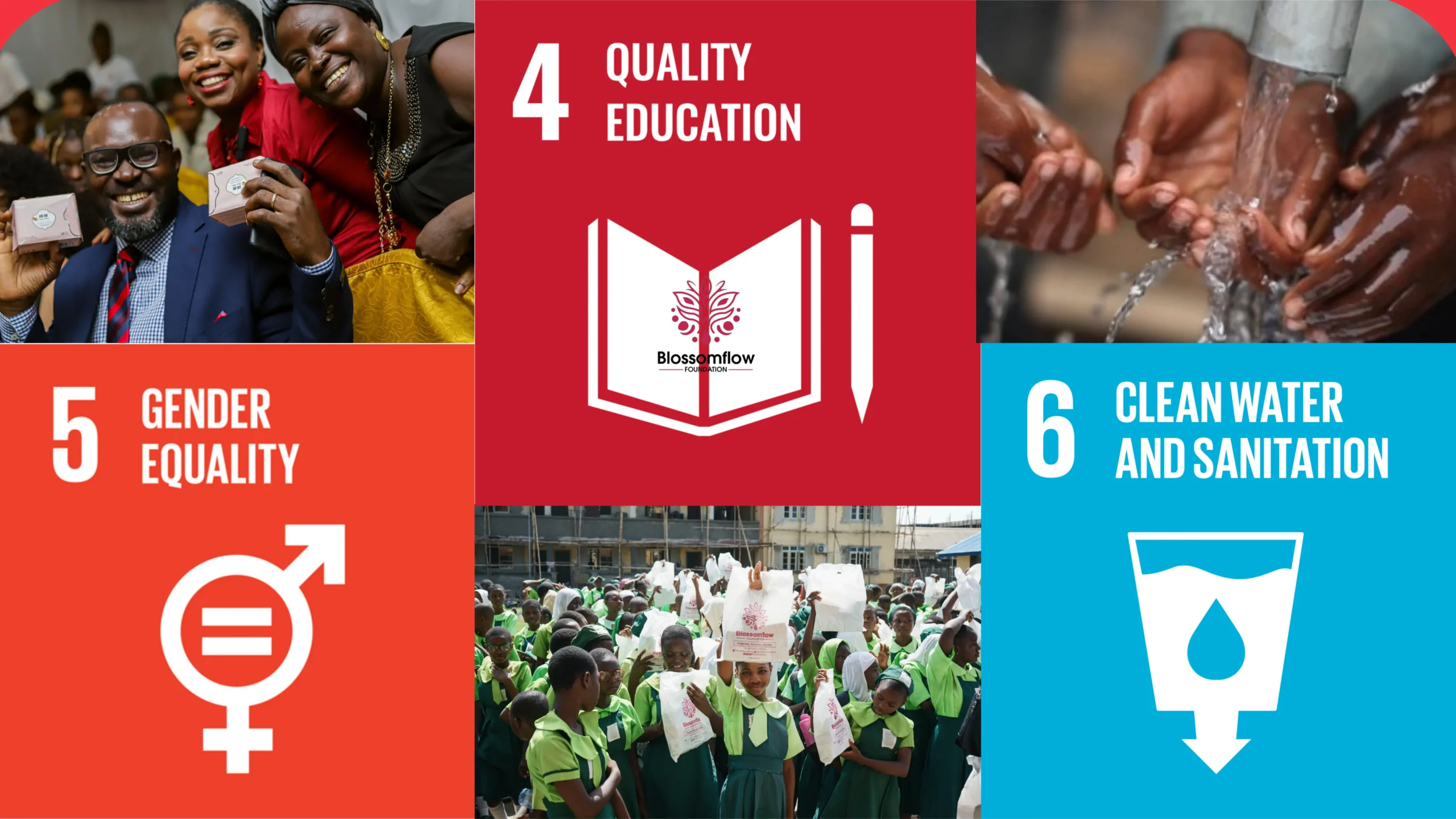
Period Poverty and SDGs: Education, Equality, Dignity.
Every morning, millions of girls wake up, put on their uniforms, and head to school with dreams of a brighter future. For many of them, education represents hope — hope for independence, opportunity, and the ability to shape their own lives. But for some girls, those dreams are interrupted every single month.
Not because they lack the desire to learn.
Not because schools do not exist.
But because of something as natural as their menstrual cycle.
This is a reality that is often overlooked when we talk about global education goals. This is why we are educating the society on Period Poverty and SDGs. The United Nations created Sustainable Development Goal 4 (SDG 4) to ensure quality education for all. However, achieving that goal requires us to address barriers that quietly keep girls out of classrooms — and menstrual health is one of them.
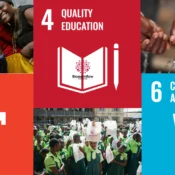
Quality Education-SDG 4
For many girls, the beginning of menstruation brings confusion and anxiety. In communities where periods are rarely discussed openly, girls often experience their first period without understanding what is happening to their bodies. The lack of information can make the experience frightening rather than empowering.
Even when girls understand menstruation, the practical challenges remain.
Many families cannot afford sanitary products regularly. Some girls resort to using cloth, tissue paper, or other unsafe alternatives just to get through the day. Others simply stay home during their period because they are afraid of leakage, embarrassment, or teasing from classmates.
Over time, missing several days of school every month begins to take a toll. Lessons are missed. Confidence drops. Academic performance suffers. In some cases, girls eventually drop out entirely.
This is what experts refer to as period poverty — the lack of access to menstrual products, hygiene facilities, and education about menstruation.
But period poverty is not just a health issue. It is an education issue.
Schools are meant to be safe spaces where children can learn and grow. Yet in many places, schools lack the basic facilities that girls need to manage their menstrual health. Toilets may be shared, poorly maintained, or lacking privacy. Clean water may not be available.
Imagine trying to focus on mathematics or science while worrying about whether your clothes are stained. For many girls, the anxiety alone is enough to keep them at home.
This is where organizations like Blossomflow Foundation are making a difference.
By providing sanitary pads and menstrual health education, the foundation helps remove one of the hidden barriers to education. When girls have access to menstrual products and accurate information, they can attend school with confidence and dignity.
Education about menstruation also helps break the silence that surrounds the topic. When teachers, parents, and even boys understand that menstruation is a normal biological process, the stigma begins to fade.
The impact goes far beyond the classroom.
When girls stay in school, they gain knowledge, skills, and opportunities that can transform their lives. Educated girls are more likely to secure employment, participate in decision-making, and contribute to the economic growth of their communities.
They are also more likely to educate their own children, creating a powerful cycle of empowerment that spans generations.
Supporting menstrual health may seem like a small step, but it has enormous implications for education and development.
If we truly want to achieve quality education for all, we must ensure that no girl’s education is interrupted by something as natural as her period.
SDG 5: Gender Equality
Period Poverty and SDGs: Breaking the Silence Around Menstruation
Menstruation is one of the most natural biological processes in the world. It has existed for as long as humanity itself. Yet in many societies, it remains surrounded by silence, myths, and stigma.
Girls grow up hearing whispers about it.
They are told to hide it.
They are taught that it is something embarrassing.
But menstruation should never be a source of shame.
Quality Education-SDG 5
The United Nations established Sustainable Development Goal 5 (SDG 5) to achieve gender equality and empower all women and girls. This is because they understand the relationship between period poverty and SDGs. However, true gender equality cannot exist while women and girls are stigmatized for a natural part of their biology.
For many girls, the first experience of menstruation comes with confusion and fear. Without proper education, they may not understand what is happening to their bodies. Some even believe they are sick or injured.
This lack of knowledge reflects a larger problem: menstruation is rarely discussed openly.
Cultural beliefs and long-standing myths have turned menstruation into a taboo topic in many communities. In some places, girls are told they cannot cook, attend religious gatherings, or interact freely with others while on their period.
These restrictions send a powerful message — that menstruation makes girls somehow “unclean” or less capable.
The impact of these beliefs is profound. Girls may grow up feeling ashamed of their bodies. They may avoid participating in school activities or sports during their period. Some even isolate themselves from friends and family.
This is not just about discomfort or embarrassment. It is about inequality.
When girls are excluded or limited because of menstruation, they are denied the same opportunities as boys. Their ability to participate fully in education, work, and community life becomes restricted.
Another major challenge is the affordability of menstrual products.
For many families, sanitary pads are not considered a priority expense. As a result, girls may be forced to rely on unsafe alternatives that are uncomfortable and unhygienic.
This is where organizations like Blossomflow Foundation are helping to change the narrative.
Through outreach programs, menstrual health education, and sanitary pad distribution, the foundation is working to restore dignity and confidence to women and girls.
But their work goes beyond providing products.
It is also about changing mindsets.
When communities begin to talk openly about menstruation, the stigma starts to disappear. Girls feel more comfortable asking questions. Boys learn to understand and respect the experiences of their female peers.
This shift in understanding is essential for achieving gender equality.
Empowering women and girls means giving them the knowledge, resources, and support they need to live confidently. It means recognizing that menstruation is not a weakness but a natural sign of health and fertility.
Breaking the silence around menstruation is therefore not just a health initiative — it is a movement for equality.
SDG 6: Clean Water and Sanitation
Period Poverty and SDGs: The Hidden Connection Between Hygiene and Dignity
Access to clean water and proper sanitation is something many people take for granted. Turning on a tap, using a clean restroom, or washing hands easily may seem like simple everyday activities.
Yet for millions of people around the world, these basic necessities are still out of reach.
Quality Education-SDG 6
The United Nations introduced Sustainable Development Goal 6 (SDG 6) to ensure access to clean water and sanitation for everyone. While this goal is often discussed in terms of drinking water and disease prevention, it also plays a critical role in menstrual health.
Managing menstruation safely requires more than just sanitary pads.
It requires clean water, private toilets, and proper waste disposal systems.
Without these facilities, maintaining menstrual hygiene becomes extremely difficult.
In many communities, girls and women do not have access to safe and private places where they can manage their periods. Public toilets may be overcrowded, poorly maintained, or lacking doors and locks.
For a girl experiencing her menstrual cycle, this lack of privacy can be distressing.
Many girls choose to stay home during their period simply because their schools or communities do not provide adequate sanitation facilities. Others struggle in silence, trying to manage their hygiene without the necessary resources.
Poor sanitation can also lead to serious health risks.
Without access to clean water for washing or safe methods of disposing menstrual products, infections and other health complications may occur.
This is why menstrual health must be part of conversations about water and sanitation.
Organizations like Blossomflow Foundation recognize that improving menstrual health requires a holistic approach. Alongside distributing sanitary pads, the foundation also promotes hygiene education and awareness about proper menstrual care.
Educating girls and communities about hygiene practices helps protect health and build confidence.
Improving sanitation facilities is equally important. When schools and public spaces provide clean water, private toilets, and safe waste disposal systems, girls feel more comfortable attending school and participating in daily activities.
The benefits extend far beyond menstrual health.
Access to clean water and sanitation improves overall public health, reduces the spread of diseases, and enhances quality of life for entire communities.
Most importantly, it restores something that every human being deserves: Dignity.
Menstrual hygiene, water access, and sanitation are deeply connected. Addressing them together brings us one step closer to a world where every woman and girl can manage her menstrual health safely, confidently, and without shame.