
5 Urgent Realities of Period Poverty: Why Girls Are Being Left Behind
The Invisible Barrier: How Period Poverty Chains Girls to the Sidelines
Imagine waking up, getting ready for your day, and suddenly realizing that a basic biological function—one you cannot control—will dictate whether you can leave your house. For millions of girls across Africa and the globe, this isn’t a “what if”; it is a monthly reality.
Period poverty isn’t just about a lack of pads. It is the lack of access to sanitary products, hygiene facilities, and reproductive education. It is a quiet thief of opportunity that restricts the very movement of girls, turning the world into a series of “no-go” zones for five days every month.
A Movement Restricted: The Day-to-Day Reality
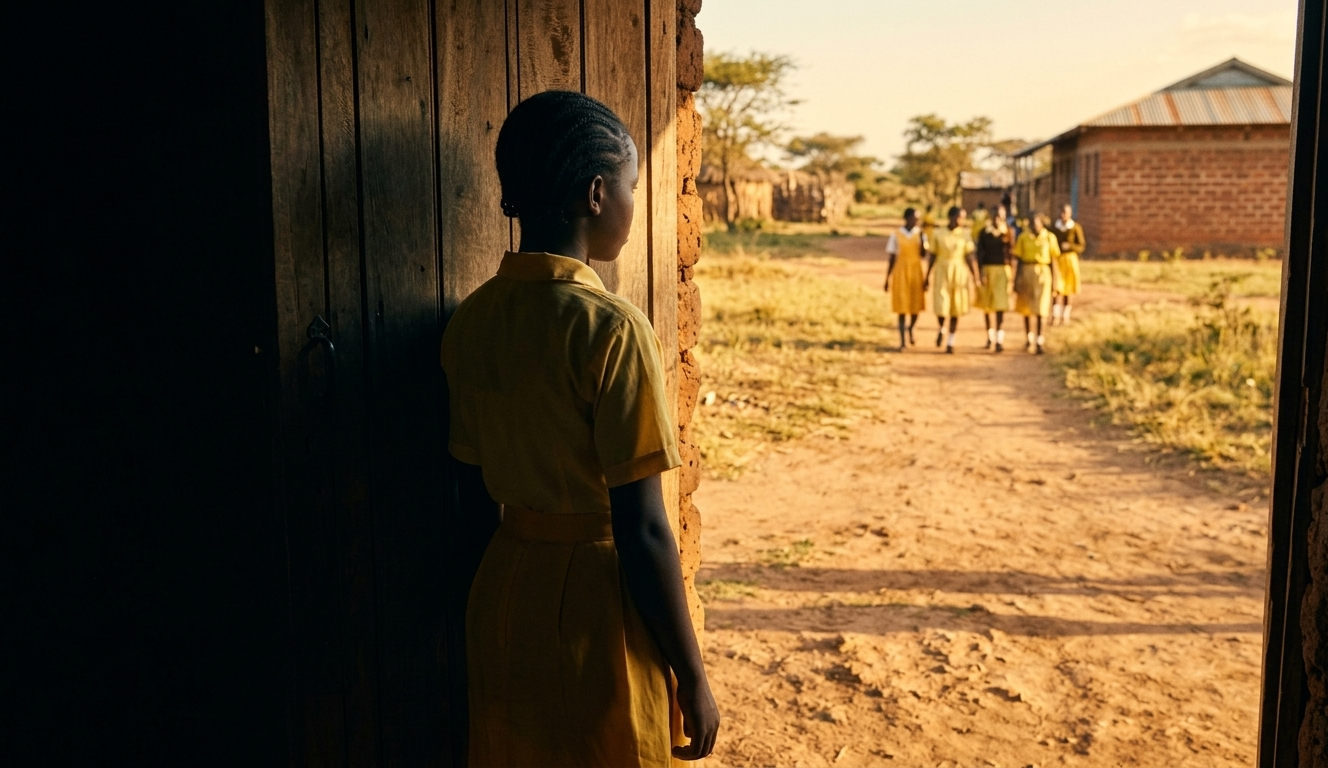
In many parts of Africa, the “movement” we take for granted—walking to school, playing sports, or simply visiting a market—becomes a high-stakes gamble when a girl starts her period.
-
The “Shadow” Walk: In rural communities, a girl without a pad might use old rags, dried leaves, or even newspaper. These substitutes are unreliable. The fear of “staining”—a public mark of shame in many cultures—forces girls to walk in shadows or stay indoors entirely.
-
The 24% Loss: Recent data from the World Economic Forum and UNICEF reveals a staggering reality: girls in some regions miss an average of 24% of the school year due to their periods. That is nearly three months of learning, social growth, and movement lost every year.
-
The Physical Barrier: According to the World Bank, one in ten girls in Sub-Saharan Africa misses school during her menstrual cycle. Without “girl-friendly” toilets—private spaces with clean water and locks—a school building effectively becomes a cage she cannot enter.
The Facts: More Than Just a “Girl Problem”
Organizations like the World Health Organization (WHO) and UNICEF emphasize that menstrual health is a matter of human rights and public health.
| Statistic | Source | Impact |
| 1 in 10 | UNESCO | Girls in Africa miss school due to lack of products/toilets. |
| 63% | World Bank | Poverty rate in specific regions making pads a “luxury” item. |
| 33% | UNICEF | Global population lacking private, safe toilets to manage periods. |
The economic situation in 2026 remains a major hurdle. With rising inflation across the continent, a pack of sanitary pads can now cost as much as a day’s worth of food. For a family, the choice is simple but devastating: eat or bleed with dignity.
The “Silent” Isolation
In some communities, the restriction on movement is literal. Cultural taboos surrounding period poverty often label menstruating girls as “impure.” They may be forbidden from entering kitchens, touching communal water sources, or attending religious gatherings.
“I felt like I was being punished for being a girl,” says Amina, a 16-year-old from a low-income community. “When I don’t have a pad, I don’t move. I sit on a rag and wait for the days to pass. The world keeps moving, but I am frozen.”
Why This Matters for the Future
When we restrict a girl’s movement, we restrict her potential. Period poverty leads to:
-
Educational Food Deserts: Dropping out due to falling behind in classes.
-
Health Risks: Reproductive and urinary tract infections (UTIs) from using unhygienic materials.
-
Exploitation: Desperate situations sometimes force girls into “transactional sex” just to afford a pack of pads—a cycle that leads to further vulnerability.
Moving Toward a Period-Friendly World
The solution isn’t just “giving out pads.” It’s about infrastructure (clean water in schools), policy (scrapping taxes on sanitary products), and education (breaking the silence).
As we look toward the goals set for 2030, we must realize that gender equality is impossible as long as period poverty forces half the population to stop moving for one week every month. It’s time to unlock the gates and let every girl walk, run, and learn with dignity.
Help Us Break the Barrier
No girl should have to choose between her dignity and her education. At Blossomflow Foundation, we are working on the front lines to provide essential supplies and health education to those who need it most.
Join our mission and donate today to help us keep more girls in school.

All Categories
Recent Posts
Are Sanitary Pads Safe? What Nigerian Women Should Know About Menstrual Product Safety
Social Change: 3 Powerful Ways BlossomFlow Drives Impact
Why Menstrual Health Belongs in the Global Development Agenda
Tags
Give them a helping hand
Every donation fuels our mission to combat period poverty. Your generosity brings us closer to menstrual equity.
+234-909-482-1642
inquiries@blossomflow.org